As long as there’s been something to sell, someone’s been overselling it. We thrive off thinking we can buy a product that arrives in two days and with the snap of our fingers a problem will be solved, whether it’s getting grime off shower tile crevices or seamlessly integrating a human resources management system into a company in less than four weeks.
It’s no wonder, then, that the latest iteration of the lure of the sale is AI washing. Simply put: AI washing is when a company claims the technology is doing more than it actually does. Like greenwashing, AI washing is often an external claim aimed at investors, customers or regulators, a way of signaling that an investment is paying off.
The problem with AI washing is that it doesn’t stay confined to a press release and has, increasingly, led to layoffs that later trigger rehiring. Employees notice the yo-yo effect, which erodes their trust in their leaders and in the technology itself.
How AI washing turns into workslop
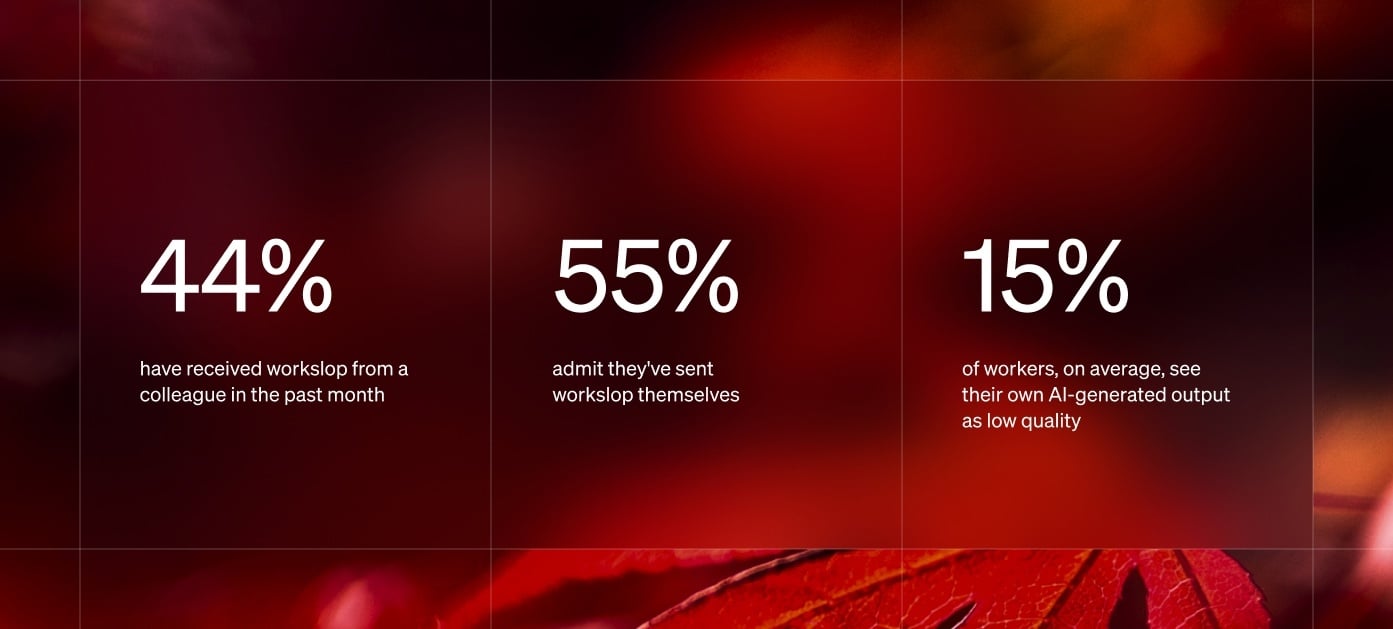
Workslop — AI-generated work that looks polished but isn’t — is what happens when the order from leadership to use AI comes faster than support and training to use it correctly. Employees, left holding the directive without the means to meet it, then produce work that checks the AI box without actually making anything better. Our research found 40% of employees have received workslop, resulting in nearly two hours of rework for the recipient for each incident of workslop.
Workslop erodes trust among colleagues, which then makes employees less willing to use AI. In a BetterUp study of 580,000 workers, trust in leadership — not adoption rates — was the strongest predictor of whether AI investment actually improved performance. Employees who doubt a leader’s intention won’t engage meaningfully with AI no matter how much access to training they’re given.
Thus, trust takes two hits. AI washing erodes it through broken promises, and workslop erodes it through the daily tax of cleaning up after it.
Why AI washing and workslop are hard to detect
Part of what makes AI washing and workslop difficult to eradicate is the fact that both phenomena look identical to real AI adoption progress. Two manager types could look the same in terms of adoption rate and usage frequency on an AI dashboard when in reality, one is exercising judgment by not sending workslop, while the other is rubber-stamping whatever the AI spits out. Similarly, one company could be announcing the hiring of a chief AI officer to lead a genuine overhaul of its data systems, while another gives the same title to an existing executive as a signal to the board, without a strategy or budget behind it. From the outside, both announcements would look the same. But one study found only about 6% of organizations report any meaningful financial impact from using AI at the enterprise level.
How to measure trust to fix AI washing and workslop
To reconcile AI washing and workslop, companies need to measure something that might not be on their AI radar: trust. Our research found how much people trust their leaders increases the odds AI actually pays off by 46%. One place to start is to pair engagement survey results with live conversations on AI adoption and watch for discrepancies. If, for example, a survey shows strong adoption numbers, but conversations reveal employees are afraid to admit when they’re not using the tool because usage is tied to their performance, that could signal a lack of trust.
Trust also comes from making it safe for employees to experiment with AI and get it wrong. Without room to fail, people quietly default to doing the work themselves and never say why. Such sentiments build up slowly until employees no longer believe the next AI announcement or, even worse, actively want to avoid using it.
Fixing AI washing and workslop comes from leaders telling the truth about where AI actually stands, both externally and internally, and then measuring that trust as rigorously as many of them are now measuring adoption.