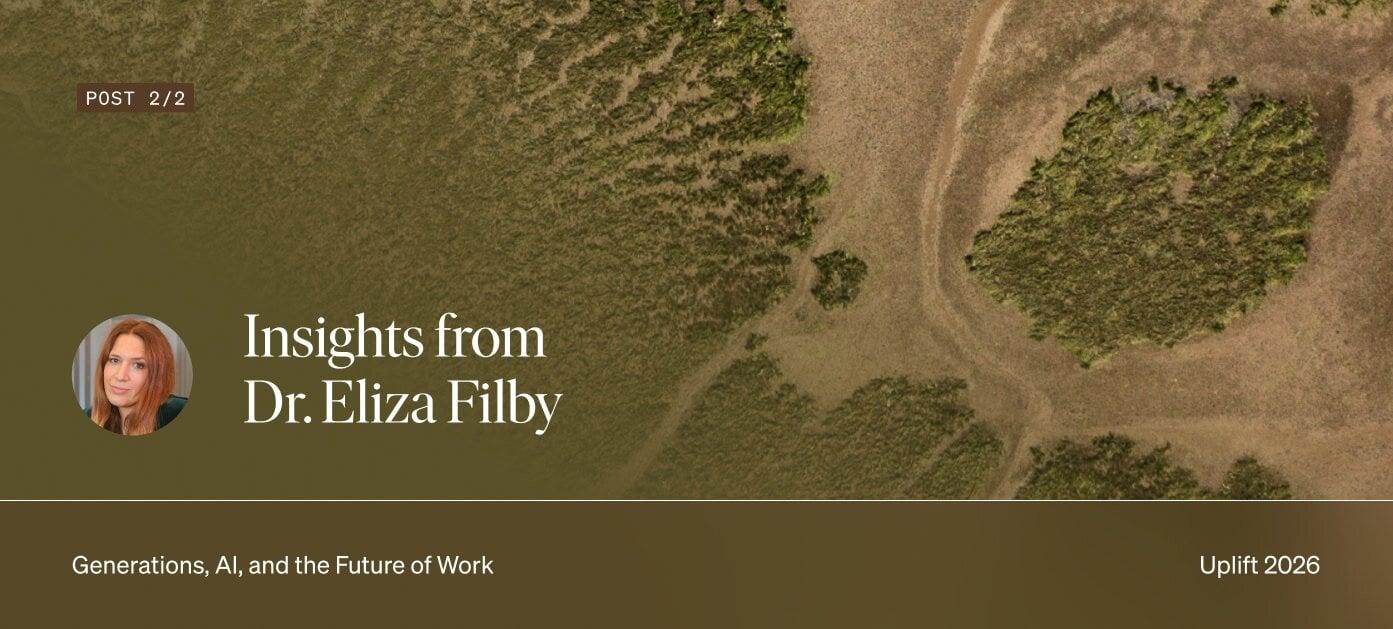
This is the second post in a series on AI and skill development. Read part one: When AI does the work, how do employees learn and develop?
The manager had a budget and two options: hire two entry-level associates, or buy an AI tool that would handle most of what those associates would have done.
Plenty of organizations are working through some version of that decision right now. Handing repetitive work to AI looks like the obvious call. But the consequences are surfacing somewhere unexpected. AI is automating entry-level tasks like reading case files and drafting memos, and those tasks are how people build judgment at work, says Dr. Eliza Filby, a researcher on generational dynamics in the workplace and founder of It's All Relative. Those assignments are monotonous by design. They build the instincts and decision-making skills that higher-level work depends on.
Why entry-level work builds judgment
Some organizations are letting junior employees skip that phase and use AI to get the work done faster. Those employees can research quickly and produce polished drafts. What they haven't built is the instinct that comes from working a problem from first principles. AI has decoupled what employees can produce from what they actually understand, the pattern part one of this series examined. The gap tends to surface later as work that looks finished but isn't.
The firms getting the balance right keep a condensed version of foundational work in place. Entry-level employees grind through it for six months instead of four years. The work is there to build judgment, not to hit billable hours.
How to audit which tasks AI should replace
You don't need a formal initiative to sort this out. Start with three focused conversations, each built around one question.
- Which skills does this role require and build toward?
For each role, define the situations you expect someone to navigate well. Where do they have to make judgment calls without clear answers, or weigh trade-offs with incomplete information? Then look one level up. What does the next role demand that this one is supposed to develop?
The more specific you get about what separates someone who can execute from someone who can eventually be trusted to lead the work, the easier it becomes to see which early tasks are load-bearing and which ones AI can safely take over.
- Which early-career tasks has AI already automated?
Look at what AI has taken over in your organization in the past year. For each task, ask whether it was building a skill or a form of judgment that still matters. If it was, what replaced that learning? If the answer is nothing, you're creating a gap in how judgment develops. - Does your performance framework measure judgment or output?
Check what your KPIs actually reward. Do they capture how decisions get made, or only what got produced? Capabilities that go unmeasured go undeveloped, and you may not notice until someone is promoted into a role they're not ready for. For a starting point, BetterUp Labs research on what belongs on an AI dashboard makes the case for measuring conditions rather than activity.
How managers protect the path to mastery
What "How did you get here?" reveals
Among the managers Filby has observed, the best ones ask their teams one question consistently: “How did you get here?”
That question does three things:
- Lets managers assess how someone is developing skills, judgment, and knowledge across a given process.
- Signals to junior employees that the reasoning counts as much as the result.
- Opens the door to targeted feedback on where judgment is thin.
Most managers have never been trained to run that conversation, which is one reason manager development programs fail. Asking about process is a skill, and it can be taught.
What deliberate AI adoption looks like
The organizations that get this right will use AI to speed up certain workflows while staying deliberate about what it should and shouldn't replace. That deliberateness is much of what separates adoption from performance.
For succession planning and leadership development, it isn't optional. The judgment your next generation of leaders needs is either being built or bypassed right now, depending on the decisions you're making today.
BetterUp helps organizations build the development frameworks that AI-assisted work requires — from assessing judgment to building manager capability for process visibility. See how organizations like yours are approaching the path-to-mastery question. Talk to a specialist
The Human Transformation Platform
Process doesn't change your business. People do. Our platform removes the guesswork from developing your people at scale and delivers growth that's proven, predictable, and precise.
The Human Transformation Platform
Process doesn't change your business. People do. Our platform removes the guesswork from developing your people at scale and delivers growth that's proven, predictable, and precise.
.jpg)