This is the first post in a four-part series on the organizational conditions that determine whether AI adoption produces real performance.
Two managers on your team are using AI at the same frequency, on the same platform, with the same adoption score. Your dashboard reports them identically. But their results aren’t.
One is driving performance, retaining their people, and producing work that compounds over time. The other is generating burnout, submitting AI-assisted output to colleagues that creates more work for them, eroding the trust their team needs to function.
BetterUp Labs research involving more than 92,000 workers identified what separates the two: not adoption rate, but the conditions surrounding it.
The cost of missing this distinction is measurable: In a study of nearly 6,000 executives, more than 80% of firms reported no measurable impact from AI on productivity or employment over three years. And only 6% report meaningful financial impact at the enterprise level.
Two managers, one dashboard
When BetterUp researchers measured AI adoption and human investment simultaneously, they identified four manager archetypes:
- Calibrators invest heavily in both AI and their people.
- Automators invest in AI while reducing human investment.
- Traditionalists maintain strong people investment with low AI adoption.
- Disengaged managers score low in both dimensions.
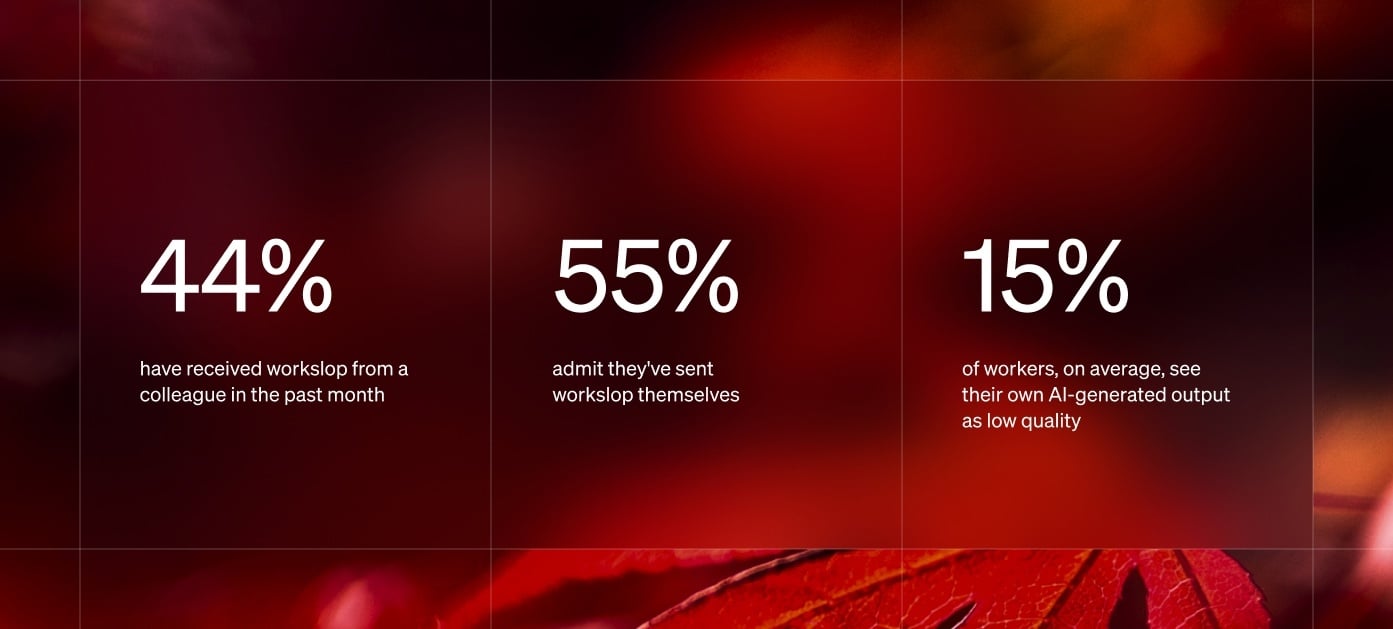
Calibrators and Automators are indistinguishable on most AI dashboards today in terms of adoption scores and usage frequency, but their outcomes aren’t the same. When looking across team measurements for performance, Calibrator-led teams score better than Automators across the board. Compared to Automators, Calibrators score +47 on basic performance, +61 on adaptive performance, +62 on collaborative performance, and +33 on team coordination. They also score 10 points lower on workslop — low-quality AI output — and 26 points lower on burnout. Conversely, Automators produce the highest burnout of all four archetypes, the most workslop, and the lowest baseline performance. (Source: BetterUp Labs 2026 manager AI readiness survey, n=696) "The Automators will secure short-term productivity gains,” noted Stephen Kelly, Chief Human Resources Officer at IBM Consulting. “But the Calibrators will bring people along with them."
Calibrators do this through three distinct behaviors. First, they protect the relationships that coordination and trust depend on, rather than substituting AI for human conversations. They then reinvest the time AI saves back into their people and into strategic thinking, rather than routing it back into other tasks. Finally, they bring high curiosity, courage, and Pilot mindset to their work, which allows for sound judgment when conditions keep changing.
The most important finding is what Calibrators aren’t. They’re not a personality type. Rather, they’re the output of specific organizational environments, which means you can’t screen your way to them.
What to measure instead
To truly distinguish between Calibrators and Automators, organizations need to measure the conditions that determine whether that AI usage produces real performance or produces workslop, burnout, and attrition.
WIth conditions-level data, enterprises can “get even more signals,” noted BlackRock’s Global Head of Leadership Development Kathy Clemons. “We get to combine the data from BetterUp with our internal data and what we're seeing and hearing on the ground to get a better understanding of what's going on at the root cause. So we're not throwing learning at every problem."
Changing what you measure doesn’t require overhauling your measurement tools. It requires a conceptual shift: stop asking whether your people are using AI, and start asking what’s happening to your people as they do. Are your managers using AI to prepare for developmental conversations, or to replace them? Is the time AI saves reinvested in relationships and strategic thinking, or flowing back into tasks? And when you look at your AI adoption dashboard, are you seeing Automators and calling them Calibrators?
Up next: The way leaders frame AI communications can make or break the path toward augmentation or automation.
See how BetterUp measures the conditions that drive AI performance, not just adoption.
Talk to an expert
.jpg)