Coaching to guide growth
A BetterUp pilot program supported veterans in the UK and US as they transitioned to civilian life.
Prior to the start of the program, service members completed BetterUp's Whole Person Assessment™ to identify their strengths, growth opportunities, and goals. We learned:
- 58% of service members cared most about career development.
- They wanted to strengthen communication skills, resilience, self-compassion, and focus.
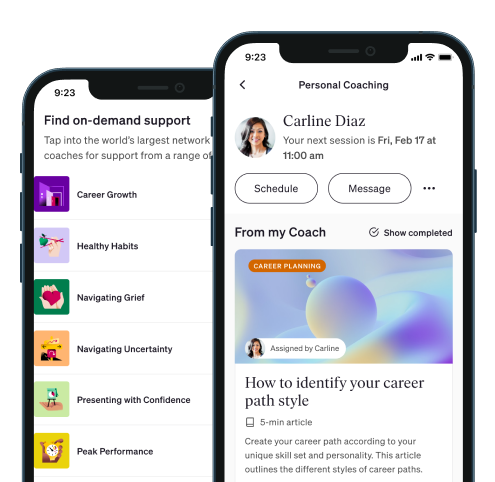
Through 1:1 coaching, access to specialized coaches, and a library of BetterUp resources, service members received support and guidance to navigate change. Working with a coach helped provide clarity about the life transition and equipped veterans tools and strategies to thrive in non-military environments.
"I developed a personal brand, identified my strengths and weaknesses, and thought about how to use my strengths to improve my weaknesses. I pursued a new role that aligns with my personal brand." - Pilot member
Veterans become empowered civilians with BetterUp

Additionally, both service members and coaches noticed sizable shifts in their levels of optimism, hope, purpose and meaning, and confidence related to their transition.
"This has been an extremely valuable and enhancing experience. I'm more excited than ever about my transition from military to civilian." - Pilot member
When we have a plan and steps to achieve it, changes don't feel as daunting. Through coaching, people can thrive and transform during transitional periods.
"I love that I leave our sessions with new insights about myself and with practical actions I can take to improve my well-being." - Pilot member
Personal transformation benefits organizational health, too. Service members leaving active duty are just one example of transformation during transition. Their growth and empowerment applies to individuals across all walks of life.
Global teams grow their leaders with BetterUp.

.png)